
- In the phase 3 REDEFINE 1 trial (NEJM, 2025), 3,417 adults with overweight or obesity and no diabetes lost 20.4% of their body weight on average over 68 weeks on CagriSema, vs 3.0% on placebo.1
- In REDEFINE 2 (NEJM, 2025), 1,206 adults with obesity and type 2 diabetes lost 13.7% on CagriSema vs 3.4% on placebo.2
- Among people who stayed on treatment in REDEFINE 1, weight loss was 22.7% on CagriSema vs 16.1% on semaglutide 2.4 mg alone.3
- Gut side effects were common: 79.6% of people on CagriSema in REDEFINE 1 reported one, vs 39.9% on placebo, mostly mild to moderate and short-lived.1
What is CagriSema?
CagriSema is an experimental once-weekly injection from Novo Nordisk that combines two medicines: semaglutide 2.4 mg, the medicine in Wegovy and Ozempic, and cagrilintide 2.4 mg, a long-acting copy of the hormone amylin.1 Every trial described here was funded by Novo Nordisk.
Semaglutide copies GLP-1, a gut hormone that turns appetite down. If you want the background, see what semaglutide is and how it works. CagriSema adds a second hormone signal on top.
What is amylin, and why add it to semaglutide?
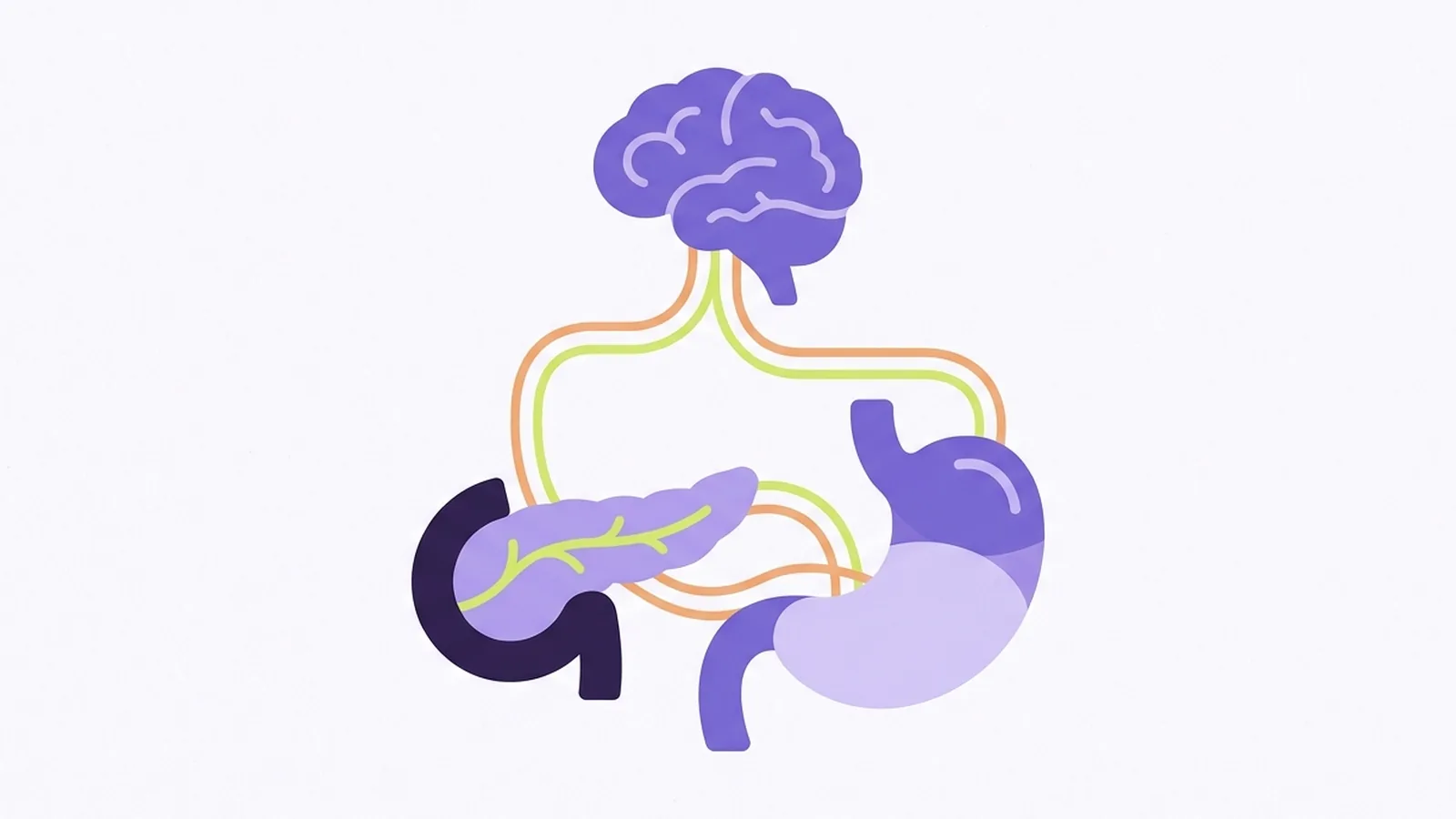
Amylin is a hormone released by the same pancreas cells that make insulin, at the same time, after you eat. According to a 2026 review, it blunts blood-sugar spikes after meals and reduces appetite, acting on feeding centers in the brainstem and by slowing how fast the stomach empties.9
An older amylin copy, pramlintide, has been approved for diabetes for years, but it led to only mild weight loss and has to be injected with meals.9 Cagrilintide was built to last a week. The idea behind CagriSema is that amylin and GLP-1 act on appetite in different ways, so together they may do more than either alone.
How much weight did people lose in REDEFINE 1?
In REDEFINE 1, published in the New England Journal of Medicine in 2025, adults without diabetes on CagriSema lost an average of 20.4% of their body weight over 68 weeks, compared with 3.0% on placebo, a difference of 17.3 percentage points.1
The trial enrolled 3,417 adults with a BMI of 30 or more, or 27 or more with at least one weight-related health problem, and no diabetes. Everyone also got diet and activity advice. People were randomly assigned to CagriSema (2,108), semaglutide alone (302), cagrilintide alone (302) or placebo (705).1
Baseline figures come from a 2026 analysis of the same trial.7 People on CagriSema were also more likely than those on placebo to reach weight loss of 5%, 20%, 25% and 30% or more.1
Is CagriSema better than semaglutide alone?
Yes, on average: among people who stayed on treatment in REDEFINE 1, weight loss at 68 weeks was 22.7% on CagriSema, 16.1% on semaglutide 2.4 mg, 11.8% on cagrilintide 2.4 mg and 2.3% on placebo, as reported in a 2026 secondary analysis.3
REDEFINE 1 was designed mainly to compare CagriSema with placebo. The trial built to compare it directly with semaglutide was REDEFINE 5, run in 331 adults in Japan and Taiwan with or without type 2 diabetes. There, weight loss at 68 weeks was 18.4% on CagriSema vs 11.9% on semaglutide, a gap of 6.5 percentage points.4
A 2026 meta-analysis that pooled five trials found CagriSema produced about 6.9 percentage points more weight loss than semaglutide 2.4 mg, and people were about twice as likely to reach 20% weight loss.8
What happened in people with type 2 diabetes?
In REDEFINE 2, published in NEJM in 2025, 1,206 adults with type 2 diabetes and a BMI of 27 or more lost 13.7% of their body weight on CagriSema over 68 weeks, vs 3.4% on placebo. 73.5% of people on CagriSema reached an HbA1c of 6.5% or lower, vs 15.9% on placebo.2
Smaller weight loss in people with diabetes is a pattern seen with other GLP-1 medicines too. For more on why, see weight loss with type 2 diabetes.
Two other diabetes trials add detail. In the 32-week phase 2 trial published in 2023, 92 adults with type 2 diabetes lost 15.6% on CagriSema, 5.1% on semaglutide and 8.1% on cagrilintide.6 In REIMAGINE 2 (2026), which enrolled 2,713 adults with type 2 diabetes, HbA1c fell by 1.91 points on CagriSema vs 1.75 points on semaglutide 2.4 mg among people who stayed on treatment, a small but statistically clear difference.5
| Trial (year) | Who | Length | CagriSema | Comparison |
|---|---|---|---|---|
| REDEFINE 1 (2025) | 3,417 adults, no diabetes | 68 weeks | −20.4% | Placebo −3.0% |
| REDEFINE 2 (2025) | 1,206 adults, type 2 diabetes | 68 weeks | −13.7% | Placebo −3.4% |
| REDEFINE 5 (2026) | 331 adults, Japan and Taiwan | 68 weeks | −18.4% | Semaglutide −11.9% |
| Phase 2 (2023) | 92 adults, type 2 diabetes | 32 weeks | −15.6% | Semaglutide −5.1% |
What are the side effects of CagriSema?
Stomach and gut side effects were the most common: in REDEFINE 1, 79.6% of people on CagriSema reported nausea, vomiting, diarrhea, constipation or belly pain, vs 39.9% on placebo. Most were mild to moderate and went away with time.1 In REDEFINE 2, the figures were 72.5% vs 34.4%.2
Compared with semaglutide alone, the extra burden looks modest. In REDEFINE 5, gut side effects affected 53% on CagriSema and 51% on semaglutide.4 The 2026 meta-analysis found gut side effects were not clearly more frequent than on semaglutide, but injection-site reactions were about three times as common.8 For what helps with nausea, see our article on GI side effects.
Does CagriSema lower blood pressure?
In REDEFINE 1, systolic blood pressure (the top number) fell by 10.9 mm Hg on CagriSema vs 2.8 mm Hg on placebo over 68 weeks, according to a 2026 analysis in Hypertension.7 The bottom number fell by 5.4 vs 1.7 mm Hg, and 63.0% of people on CagriSema reached their blood pressure target, vs 32.0% on placebo.7
Lower blood pressure is a risk marker, not proof of fewer heart attacks. A separate outcomes trial, REDEFINE 3, randomized 7,076 adults with established heart or blood vessel disease to CagriSema or placebo to count heart attacks, strokes and cardiovascular deaths. Its design was published in 2026; results have not been.10 For the semaglutide version of that question, see what the SELECT trial found.
Is CagriSema available yet?
As of early November 2026, we found no FDA label for CagriSema or cagrilintide on DailyMed, the US government's label database, so it should not be assumed to be available by prescription in the US. Products sold online as "cagrilintide" are not the medicine tested in these trials. Ask your prescriber about current status where you live. For other medicines in the pipeline, see our articles on retatrutide and orforglipron, or the full GLP-1 drugs list.
What this research does not show
- Long-term results. The main trials ran for 68 weeks. What happens over many years, or after stopping, has not been reported for CagriSema. With other GLP-1 medicines, weight tends to return after stopping.
- Heart outcomes. Blood pressure and weight improved, but REDEFINE 3 results are not yet published.
- Head-to-head with tirzepatide or retatrutide. No published trial has compared them directly.
- Body composition. The 2026 meta-analysis noted that how much of the weight lost is fat vs muscle remains undetermined.8
- Your own result. Averages hide a wide range. Whether any medicine fits you is a decision for you and your prescriber.
Common questions
Is CagriSema FDA approved?
We could not find an FDA label for it. As of early November 2026, DailyMed, the US government's database of approved drug labels, lists no product containing cagrilintide. Check with your prescriber or the FDA for the current status.
Is CagriSema stronger than Wegovy?
In trials that tested both, yes on average. In REDEFINE 1, among people who stayed on treatment, weight loss at 68 weeks was 22.7% on CagriSema and 16.1% on semaglutide 2.4 mg (the dose in Wegovy). In REDEFINE 5 in Japan and Taiwan, it was 18.4% vs 11.9%.
What is cagrilintide?
Cagrilintide is a long-acting, man-made version of amylin, a hormone the pancreas releases along with insulin after meals. Amylin helps you feel full and slows how fast the stomach empties. On its own, cagrilintide 2.4 mg led to 11.8% weight loss in REDEFINE 1 among people who stayed on treatment.
Does CagriSema cause more nausea than semaglutide?
The answer is not settled. A 2026 meta-analysis of five trials found gut side effects were not clearly more common than on semaglutide alone, but injection-site reactions were about three times as common. In REDEFINE 5, gut side effects affected 53% on CagriSema and 51% on semaglutide.
How does CagriSema compare with retatrutide or tirzepatide?
No published trial has compared them head to head. Trials differ in who was enrolled, how long they ran and how results were analysed, so comparing headline numbers across trials can mislead. See our articles on retatrutide and semaglutide vs tirzepatide.
Sources
- Garvey WT, Blüher M, Osorto Contreras CK, et al. Coadministered Cagrilintide and Semaglutide in Adults with Overweight or Obesity. N Engl J Med. 2025;393(7):635-647. PubMed · doi:10.1056/NEJMoa2502081
- Davies MJ, Bajaj HS, Broholm C, et al. Cagrilintide-Semaglutide in Adults with Overweight or Obesity and Type 2 Diabetes. N Engl J Med. 2025;393(7):648-659. PubMed · doi:10.1056/NEJMoa2502082
- Busetto L, Contreras CO, Christensen MH, et al. Efficacy of CagriSema for Reaching Anthropometric Treatment Targets and Cardiometabolic Outcomes: A Secondary, Post hoc Analysis of REDEFINE 1. Diabetes Obes Metab. 2026;28(10):9317-9325. PubMed · Full text (PMC)
- Yamauchi T, Becker NP, Hagemann CA, et al. Efficacy and safety of co-administered cagrilintide and semaglutide versus semaglutide alone in adults with overweight or obesity with or without type 2 diabetes in Japan and Taiwan (REDEFINE 5): a multicentre, randomised, active-controlled, phase 3a trial. Lancet Diabetes Endocrinol. 2026;14(6):450-462. PubMed · doi:10.1016/S2213-8587(25)00402-4
- Buse JB, Bajaj HS, Dalskov SM, et al. Cagrilintide-semaglutide (CagriSema) versus semaglutide or cagrilintide in people with type 2 diabetes (REIMAGINE 2): a double-blind, randomised, controlled, phase 3 study. Lancet Diabetes Endocrinol. 2026;14(8):662-677. PubMed · doi:10.1016/S2213-8587(26)00125-7
- Frias JP, Deenadayalan S, Erichsen L, et al. Efficacy and safety of co-administered once-weekly cagrilintide 2·4 mg with once-weekly semaglutide 2·4 mg in type 2 diabetes: a multicentre, randomised, double-blind, active-controlled, phase 2 trial. Lancet. 2023;402(10403):720-730. PubMed · doi:10.1016/S0140-6736(23)01163-7
- Verma S, Böttcher M, Brown P, et al. CagriSema Reduces Blood Pressure in Adults With Overweight or Obesity: REDEFINE 1. Hypertension. 2026;83(2):e26055. PubMed · Full text (PMC)
- Rasool ZK, Shah R, Batool AEZ, et al. CagriSema versus Semaglutide 2.4 mg monotherapy for weight management in adults with overweight or obesity, with or without type 2 diabetes: a systematic review, meta-analysis, and trial sequential analysis. Front Endocrinol (Lausanne). 2026;17:1903335. PubMed · Full text (PMC)
- Panou T, Gouveri E, Popovic DS, et al. New Amylin-Based Agonists for the Treatment of Obesity and Type 2 Diabetes Mellitus. Diabetes Ther. 2026;17(11):1613-1638. PubMed · Full text (PMC)
- Cavender MA, Jastreboff AM, Cheng AYY, et al. Design and baseline characteristics of the CagriSema cardiovascular outcomes trial (REDEFINE 3). Am Heart J. 2026:107626. PubMed · doi:10.1016/j.ahj.2026.107626
Cite this article: Minh Truong. How much weight do people lose on CagriSema? What the REDEFINE trials found. GLP-1.app. Updated November 9, 2026. https://glp-1.app/cagrisema-weight-loss/
