- Yes, some: in trial body scans, about 25% to 40% of the weight lost on semaglutide (Ozempic, Wegovy) or tirzepatide (Zepbound, Mounjaro) was lean mass, which includes muscle.1,3,4
- Fat falls faster than lean mass, so body composition improves on average. Strength held up in the few studies that measured it, but that evidence is weak.1,7,8
- Exercise is the best-tested way to limit the loss. In diet trials, lean mass was 7.7% of weight lost with exercise vs 22.3% without.5
Ozempic and Wegovy are both semaglutide; Ozempic is the type 2 diabetes brand (up to 2 mg) and Wegovy the weight-management brand (2.4 mg). Most body-composition data come from the higher doses. Lean mass is everything that is not fat: muscle, but also water, organs and bone.
Does Ozempic cause muscle loss?
Yes, semaglutide causes some lean mass loss, as any large weight loss does. In a STEP 1 substudy of 140 adults with obesity, semaglutide 2.4 mg cut fat mass by 19.3% and lean mass by 9.7% over 68 weeks.1
Because fat fell about twice as fast, the share of the body made up of lean mass actually rose, by 3.0 percentage points.1 The Ozempic dose itself was scanned in SUSTAIN 8: in 178 adults with type 2 diabetes, semaglutide 1 mg reduced fat mass by 3.4 kg and lean mass by 2.3 kg over 52 weeks, and the lean share of the body rose by 1.2 points.4 SUSTAIN 8 compared semaglutide with canagliflozin, not placebo, and the changes in body composition did not differ significantly between the two drugs.
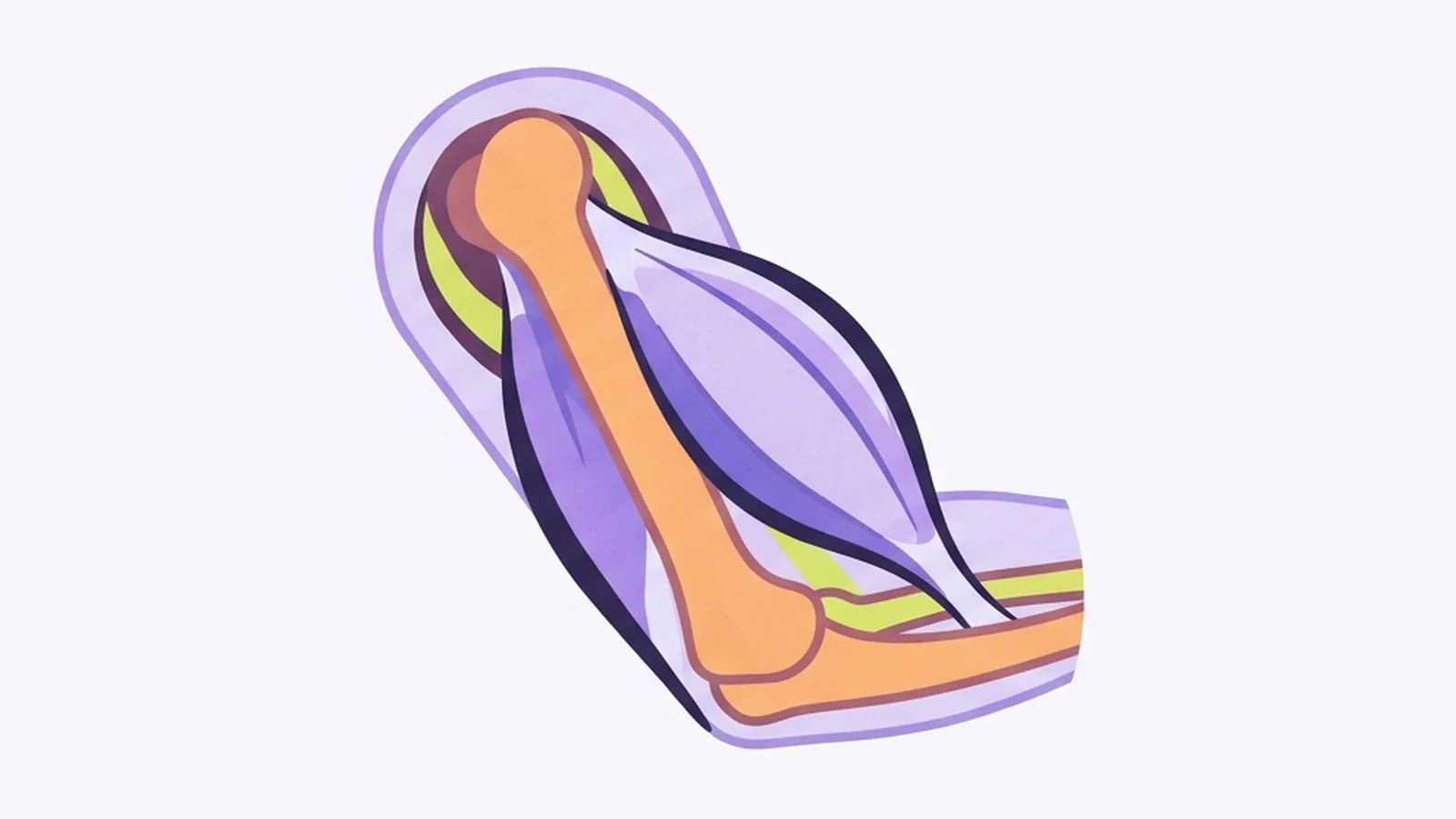
How much of the weight lost on Ozempic is muscle?
Between about a quarter and two-fifths of the weight lost was lean mass in the DXA (DEXA) substudies, and roughly half of lean mass is muscle. A 2025 joint advisory from four US nutrition and obesity societies applied that to STEP 1: of 13.6 kg lost, 5.3 kg (38%) was lean mass, which works out to about 20% of the weight lost being muscle.2
| Body-scan substudy (who) | Weight | Fat mass | Lean mass | Lean share of weight lost |
|---|---|---|---|---|
| STEP 1, semaglutide 2.4 mg, 68 weeks (140 adults with obesity, no diabetes) | −15.0% | −19.3% | −9.7% | 38% |
| SUSTAIN 8, semaglutide 1 mg, 52 weeks (178 adults with type 2 diabetes) | n/a | −3.4 kg | −2.3 kg | about 40% |
| SURMOUNT-1, tirzepatide 5–15 mg, 72 weeks (160 adults with obesity or overweight) | −21.3% | −33.9% | −10.9% | about 25% |
| SURMOUNT-1, placebo | −5.3% | −8.2% | −2.6% | about 25% |
The STEP 1 result is a meeting abstract, so it is less complete than a full paper. The weight-loss side of these trials is covered in Ozempic before and after.
Is it more muscle loss than dieting or bariatric surgery?
About the same as surgery and more than diet-and-exercise programs, according to a 2026 meta-analysis of 21 randomized trials (1,334 adults) with at least 10% weight loss. Lean (fat-free) mass made up 33.3% of the weight lost on incretin drugs, 34.2% after bariatric surgery and 14.9% with diet with or without exercise.5
Two caveats. The trials differed in who took part, how long they ran and how lean mass was measured. And within one trial the picture can look different: in SURMOUNT-1, lean mass was about 25% of the weight lost on both tirzepatide and placebo, so the drug produced much more weight loss without a worse fat-to-lean split.3
Lean mass, muscle and muscle quality: what MRI shows
MRI can measure muscle directly, and the two GLP-1 MRI studies found that muscle shrank roughly in line with weight while fat inside the muscle fell. In the SURPASS-3 MRI substudy of 246 adults with type 2 diabetes, tirzepatide reduced thigh muscle volume by 0.64 L and muscle fat infiltration by 0.36 percentage points over 52 weeks.6
Compared with about 2,900 UK Biobank adults, that muscle loss was what you would expect for the weight lost, while the drop in muscle fat was larger than expected.6 Fat infiltration matters because fatty muscle tends to work less well. In a STEP UP MRI substudy of 55 adults with obesity (mostly on semaglutide 7.2 mg), thigh muscle volume fell 1.1 L more than on placebo, a difference that was not statistically significant, and thigh muscle fat infiltration fell 0.92 points more.7 Both studies were funded by the drug makers and were small.
Does Ozempic make you weaker?
The studies so far do not show a clear loss of strength, but the evidence is weak. A 2026 meta-analysis pooled 10 studies of 660 adults on semaglutide and found no significant change in handgrip strength (−0.16 kg), with the certainty rated very low because most data had no control group.8
- STEP UP. Sit-to-stand repetitions in 30 seconds went from an average of 13 at the start to 15 at week 72.7
- Liraglutide (Saxenda) trial. In 193 adults with obesity, liraglutide alone preserved absolute leg strength but did not improve fitness. Adding exercise cut stair-climb time by 8.6% and raised fitness compared with liraglutide alone.9
- STEP-HFpEF. In 1,145 adults with obesity-related heart failure, semaglutide 2.4 mg increased 6-minute walk distance by 17.1 m more than placebo at 52 weeks.10
Losing weight also means carrying less, so strength relative to body weight can improve even when absolute strength stays flat.
Who is most at risk of muscle loss on a GLP-1?
Older adults and people who already have low muscle mass (sarcopenic obesity) have the least to spare. In SURMOUNT-1, people aged 65 and over lost the same share as everyone else: 76% of their weight loss was fat on tirzepatide, vs 74% in those under 50.3
The 2025 advisory lists the groups at higher risk when low appetite cuts protein intake: older age, perimenopause or menopause, low testosterone, sedentary habits and no strength training. It also warns that stopping and restarting GLP-1s with weight regain ("weight cycling") may worsen muscle and bone loss.2 If you are in a higher-risk group, your care team can check strength or body composition over time.
For more on people over 65, including falls and bone, see GLP-1 medicines after 65: muscle in older adults.
How to prevent muscle loss on Ozempic: what the trials show
Exercise has the strongest evidence. In diet trials pooled in the 2026 meta-analysis, lean mass was 7.7% of weight lost with exercise vs 22.3% without, and the liraglutide trial above found exercise improved fitness where the drug alone did not.5,9
The 2025 advisory recommends strength training at least three times a week and says higher protein alone "is likely inadequate" without it.2 We cover the amounts in strength training on a GLP-1 and the protein ranges, with a calculator, in how much protein you need on a GLP-1. Most of the exercise evidence comes from diet trials and the older liraglutide trial, not from semaglutide or tirzepatide trials.
Are there drugs to stop muscle loss on GLP-1s?
None is approved as of November 2026, but the first large trial of one has reported. In the phase 2 BELIEVE trial of 507 adults with obesity, adding the investigational antibody bimagrumab to semaglutide 2.4 mg limited lean mass loss to 2.9% at 72 weeks, vs 7.4% on semaglutide alone.11
Fat made up 92.2% of the weight lost on the high-dose combination vs 75.6% on semaglutide alone, and weight loss at 48 weeks was 17.8 kg vs 14.2 kg (3.3 kg on placebo). Muscle spasms, diarrhea and acne were common with bimagrumab.11 The trial was funded by Eli Lilly, which owns bimagrumab, and phase 3 results are needed before it could be approved.
Key numbers
| Stat | Value | Population | Source |
|---|---|---|---|
| Lean mass lost on semaglutide 2.4 mg | −9.7% (fat −19.3%) | 140 adults with obesity, 68 weeks | STEP 1 substudy1 |
| Lean share of weight lost, semaglutide 2.4 mg | 38% (5.3 of 13.6 kg) | STEP 1 substudy | 2025 advisory2 |
| Lean mass lost on semaglutide 1 mg (Ozempic dose) | −2.3 kg (fat −3.4 kg) | 178 adults with type 2 diabetes, 52 weeks | SUSTAIN 8 substudy4 |
| Lean share of weight lost, tirzepatide vs placebo | about 25% vs about 25% | 160 adults with obesity or overweight, 72 weeks | SURMOUNT-1 substudy3 |
| Lean share of weight lost: drugs, surgery, diet | 33.3%, 34.2%, 14.9% | 21 randomized trials, 1,334 adults | 2026 meta-analysis5 |
| Thigh muscle volume change on tirzepatide | −0.64 L | 246 adults with type 2 diabetes, 52 weeks | SURPASS-3 MRI6 |
| Handgrip strength change on semaglutide | −0.16 kg (not significant) | 10 studies, 660 adults | 2026 meta-analysis8 |
| Lean mass change, semaglutide alone vs + bimagrumab | −7.4% vs −2.9% | 507 adults with obesity, 72 weeks | BELIEVE phase 211 |
Common questions
Does Ozempic cause muscle loss?
Semaglutide, the drug in Ozempic and Wegovy, causes some loss of lean mass, which includes muscle, as any large weight loss does. In a STEP 1 body-scan substudy of adults with obesity, about 38% of the weight lost on semaglutide 2.4 mg was lean mass, and in the SUSTAIN 8 substudy of adults with type 2 diabetes on Ozempic 1 mg, lean mass fell by 2.3 kg over 52 weeks.
Does Ozempic make you lose muscle or fat?
Mostly fat. In the STEP 1 substudy, fat mass fell by 19.3% and lean mass by 9.7% over 68 weeks, so the share of the body made up of lean mass rose by 3.0 percentage points. A 2025 advisory estimates muscle is about half of lean mass, which puts muscle at roughly 20% of the weight lost.
How much muscle do you lose on Ozempic compared with dieting?
A 2026 meta-analysis of randomized trials with at least 10% weight loss found lean mass made up 33.3% of the weight lost on incretin drugs, 34.2% after bariatric surgery and 14.9% with diet and exercise programs. In the SURMOUNT-1 tirzepatide substudy, though, about 25% of the weight lost was lean mass on both the drug and placebo.
Does Ozempic make you weaker?
The evidence so far does not show a clear loss of strength. A 2026 meta-analysis of 10 studies with 660 people on semaglutide found no significant change in handgrip strength (−0.16 kg), but the authors rated the certainty as very low. In the STEP UP MRI substudy, sit-to-stand repetitions went from 13 to 15 in 30 seconds.
Is there a drug that prevents muscle loss on semaglutide?
Not an approved one. In the phase 2 BELIEVE trial of 507 adults with obesity, published in 2026, adding the investigational antibody bimagrumab to semaglutide 2.4 mg cut lean mass loss at 72 weeks to 2.9%, vs 7.4% on semaglutide alone.
Sources
- Wilding JPH, Batterham RL, Calanna S, et al. Impact of Semaglutide on Body Composition in Adults With Overweight or Obesity: Exploratory Analysis of the STEP 1 Study. J Endocr Soc. 2021;5(Suppl 1):A16-A17. Meeting abstract. Full text (PMC)
- Mozaffarian D, Agarwal M, Aggarwal M, et al. Nutritional priorities to support GLP-1 therapy for obesity: A joint Advisory from the American College of Lifestyle Medicine, the American Society for Nutrition, the Obesity Medicine Association, and The Obesity Society. Obesity (Silver Spring). 2025;33(8):1475-1503. doi:10.1002/oby.24336 · Full text (PMC)
- Look M, Dunn JP, Kushner RF, et al. Body composition changes during weight reduction with tirzepatide in the SURMOUNT-1 study of adults with obesity or overweight. Diabetes Obes Metab. 2025;27(5):2720-2729. PubMed · Full text (PMC)
- McCrimmon RJ, Catarig AM, Frias JP, et al. Effects of once-weekly semaglutide vs once-daily canagliflozin on body composition in type 2 diabetes: a substudy of the SUSTAIN 8 randomised controlled clinical trial. Diabetologia. 2020;63(3):473-485. PubMed · Full text (PMC)
- Busk-Cirera L, Carlsen IØ, Madsen LB, et al. Effects of Incretin-Based Therapies, Diet and Exercise Interventions, and Bariatric Surgery on Fat-Free Mass in Adults With Overweight or Obesity: A Systematic Review and Meta-Analysis. Diabetes Obes Metab. 2026;28(9):7737-7751. PubMed · Full text (PMC)
- Sattar N, Neeland IJ, Dahlqvist Leinhard O, et al. Tirzepatide and muscle composition changes in people with type 2 diabetes (SURPASS-3 MRI): a post-hoc analysis of a randomised, open-label, parallel-group, phase 3 trial. Lancet Diabetes Endocrinol. 2025;13(6):482-493. doi:10.1016/S2213-8587(25)00027-0 · PubMed
- Hjelmesæth J, Bhat S, Garvey WT, et al. Effect of Semaglutide on Thigh Skeletal Muscle Volume, Fat Infiltration and Physical Function in People With Obesity: Secondary Analysis of STEP UP. Diabetes Obes Metab. 2026;28(12):11653-11663. PubMed · Full text (PMC)
- Machado LG, Siedschlag Schmidt PH, Tasca Petroski G, et al. Changes in Muscle Strength Following Semaglutide Treatment in Adults: A Systematic Review With Meta-Analysis of Handgrip Strength. Diabetes Obes Metab. 2026. Online ahead of print. doi:10.1111/dom.71432 · PubMed
- Jensen SBK, Fiorenza M, Juhl CR, et al. Physical Fitness with Exercise and GLP-1 Receptor Agonist Treatment Alone or Combined After Diet-Induced Weight Loss: A Secondary Analysis of a Randomized Controlled Trial in Adults with Obesity. Sports Med. 2026;56(7):1785-1800. PubMed · Full text (PMC)
- Borlaug BA, Kitzman DW, Patel S, et al. Semaglutide and Exercise Function in Obesity-Related HFpEF: Insights From the STEP-HFpEF Program. JACC Heart Fail. 2025;13(11):102660. PubMed · Full text (PMC)
- Heymsfield SB, Aronne LJ, Montgomery P, et al. Bimagrumab plus semaglutide alone or in combination for the treatment of obesity: a randomized phase 2 trial. Nat Med. 2026;32(3):869-882. doi:10.1038/s41591-026-04204-0 · Full text (PMC)
Cite this article: Minh Truong. Does Ozempic cause muscle loss? What the body-scan studies found. GLP-1.app. Updated November 9, 2026. https://glp-1.app/glp-1-muscle-loss/
